Forest Laurissilva - an Extensive Article
Laurissilva Forest
The island of Madeira is the proud guardian of an environmental heritage of inestimable importance. The Laurissilva forest, which is about 20 million years old, dates back to the Miocene and Pliocene periods of the Tertiary Period. Nonetheless, the mark of time, which makes it a 'living fossil', does not seem to affect its vibrant energy.
If in that ancestral past it was distributed throughout the south of Europe and the north of Africa, after climate changes determined by the formation of the Mediterranean, the Laurissilva forest ended up finding in island regions its last refuge.
Currently, it occupies an area of around 15.000 hectares in Madeira, which corresponds to 20% of the island, with greater expression in the high areas of the north. This subtropical rainforest is composed mainly of species endemic to Macaronesia. It is a vast ecosystem that shelters a diversified fauna and flora, where the trees, many of which are centuries-old, of the Lauraceae family (to which the Laurissilva forest owes its name) stand out.
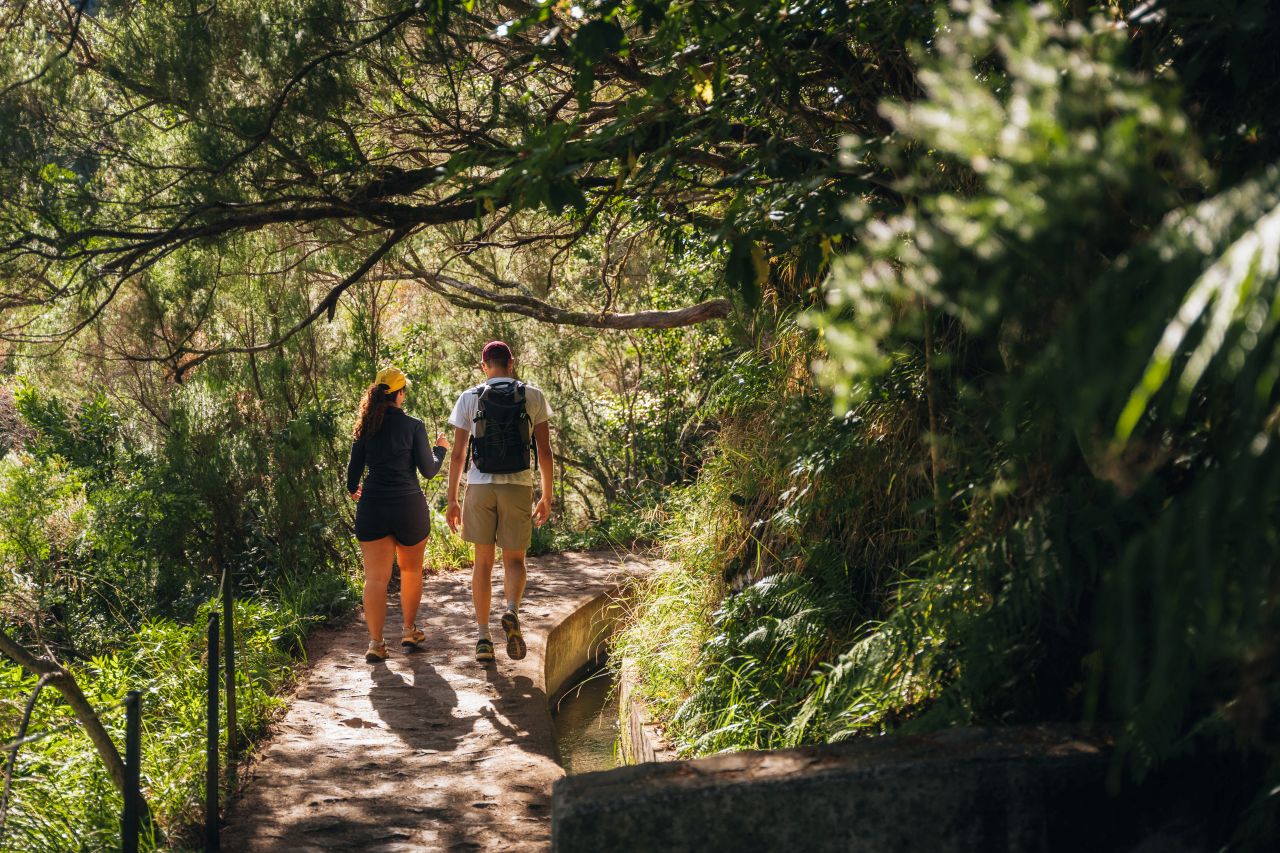
UNESCO World Heritage since 1999, the Laurissilva forest is a unique natural treasure. Walk along the trails and 'levadas' that cross it and enjoy the privilege of being connected to this green area of Madeira.
Features:
A 20-million-year-old subtropical rainforest, the Laurissilva forest dates back to the Tertiary Age. Declared a UNESCO World Heritage Site, it is an invaluable environmental heritage.
Characteristics:
Laurel forests are characterized by evergreen and hardwood trees, reaching up to 40 m (130 ft) in height. Laurel forest, laurisilva, and laurissilva all refer to plant communities that resemble the bay laurel.
Some species belong to the true laurel family, Lauraceae, but many have similar foliage to the Lauraceae due to convergent evolution. As in any other rainforest, plants of the laurel forests must adapt to high rainfall and humidity. The trees have adapted in response to these ecological drivers by developing analogous structures, leaves that repel water. Laurophyll or lauroid leaves are characterized by a generous layer of wax, making them glossy in appearance, and a narrow, pointed oval shape with an apical mucro or "drip tip", which permits the leaves to shed water despite the humidity, allowing respiration. The scientific names laurina, laurifolia, laurophylla, lauriformis, and lauroides are often used to name species of other plant families that resemble the Lauraceae. The term Lucidophyll, referring to the shiny surface of the leaves, was proposed in 1969 by Tatuo Kira.The scientific names Daphnidium, Daphniphyllum, Daphnopsis, Daphnandra, Daphne from Greek: Δάφνη, meaning "laurel", laurus, Laureliopsis, laureola, laurifolia, laurifolius, lauriformis, laurina, Prunus laurocerasus (cherry laurel), Prunus lusitanica (Portugal laurel), Corynocarpus laevigatus (New Zealand Laurel), and Corynocarpus rupestris designate species of other plant families whose leaves resemble Lauraceae.The term "lauroid" is also applied to climbing plants such as ivies, whose waxy leaves somewhat resemble those of the Lauraceae.
Mature laurel forests typically have a dense tree canopy and low light levels at the forest floor. Some forests are characterized by an overstory of emergent trees.
Laurel forests are typically multi-species, and diverse in both the number of species and the genera and families represented In the absence of strong environmental selective pressure, the number of species sharing the arboreal stratum is high, although not reaching the diversity of tropical forests; nearly 100 tree species have been described in the laurisilva rainforest of Misiones (Argentina), about 20 in the Canary Islands. This species diversity contrasts with other temperate forest types, which typically have a canopy dominated by one or a few species. Species diversity generally increases towards the tropics. In this sense, the laurel forest is a transitional type between temperate forests and tropical rainforests.
If in that ancestral past it was distributed throughout the south of Europe and the north of Africa, after climate changes determined by the formation of the Mediterranean, the Laurissilva forest ended up finding in island regions its last refuge.
Currently, it occupies an area of around 15.000 hectares in Madeira, which corresponds to 20% of the island, with greater expression in the high areas of the north. This subtropical rainforest is composed mainly of species endemic to Macaronesia. It is a vast ecosystem that shelters a diversified fauna and flora, where the trees, many of which are centuries-old, of the Lauraceae family (to which the Laurissilva forest owes its name) stand out.
UNESCO World Heritage since 1999, the Laurissilva forest is a unique natural treasure. Walk along the trails and 'levadas' that cross it and enjoy the privilege of being connected to this green area of Madeira.
Features:
A 20-million-year-old subtropical rainforest, the Laurissilva forest dates back to the Tertiary Age. Declared a UNESCO World Heritage Site, it is an invaluable environmental heritage.
Characteristics:
Laurel forests are characterized by evergreen and hardwood trees, reaching up to 40 m (130 ft) in height. Laurel forest, laurisilva, and laurissilva all refer to plant communities that resemble the bay laurel.
Some species belong to the true laurel family, Lauraceae, but many have similar foliage to the Lauraceae due to convergent evolution. As in any other rainforest, plants of the laurel forests must adapt to high rainfall and humidity. The trees have adapted in response to these ecological drivers by developing analogous structures, leaves that repel water. Laurophyll or lauroid leaves are characterized by a generous layer of wax, making them glossy in appearance, and a narrow, pointed oval shape with an apical mucro or "drip tip", which permits the leaves to shed water despite the humidity, allowing respiration. The scientific names laurina, laurifolia, laurophylla, lauriformis, and lauroides are often used to name species of other plant families that resemble the Lauraceae. The term Lucidophyll, referring to the shiny surface of the leaves, was proposed in 1969 by Tatuo Kira.The scientific names Daphnidium, Daphniphyllum, Daphnopsis, Daphnandra, Daphne from Greek: Δάφνη, meaning "laurel", laurus, Laureliopsis, laureola, laurifolia, laurifolius, lauriformis, laurina, Prunus laurocerasus (cherry laurel), Prunus lusitanica (Portugal laurel), Corynocarpus laevigatus (New Zealand Laurel), and Corynocarpus rupestris designate species of other plant families whose leaves resemble Lauraceae.The term "lauroid" is also applied to climbing plants such as ivies, whose waxy leaves somewhat resemble those of the Lauraceae.
Mature laurel forests typically have a dense tree canopy and low light levels at the forest floor. Some forests are characterized by an overstory of emergent trees.
Laurel forests are typically multi-species, and diverse in both the number of species and the genera and families represented In the absence of strong environmental selective pressure, the number of species sharing the arboreal stratum is high, although not reaching the diversity of tropical forests; nearly 100 tree species have been described in the laurisilva rainforest of Misiones (Argentina), about 20 in the Canary Islands. This species diversity contrasts with other temperate forest types, which typically have a canopy dominated by one or a few species. Species diversity generally increases towards the tropics. In this sense, the laurel forest is a transitional type between temperate forests and tropical rainforests.